














Back
Back
Back
Back




In the dynamic landscape of the modern business world, the supply chain has undergone a profound transformation since the start of the digital age, and at the heart of this evolution lies the omnipresence of data. Unlike its form 100 years ago when the term ‘supply chain’ was first conceived, today's network of resources is intricately woven with the threads of information and technology. As a result of globalization, industrial machinery advancements and ever-fluctuating market conditions, businesses now find themselves in a data-rich environment with an unprecedented volume of information at their fingertips.
While this influx of data presents unparalleled opportunities, it also poses a unique challenge – the need to navigate through the vast sea of information and harness its power for effective analysis and optimization.
Even in the digital age, many computerized methods of supply chain management fall short in utilizing data and addressing the intricacies of supply chain dynamics, which often results in suboptimal performance, increased costs and vulnerability to disruptions. Supply Chain Simulation models have emerged to bridge this gap. Industrial enterprises, recognizing that addressing these challenges requires more than mere digitalization, are turning to Supply Chain Simulation to leverage their data comprehensively.
In addition to acting as a proactive tool to optimize supply chain processes, Supply Chain Simulation technologies are being implemented by industrial organizations today to solve some of their most common and complex supply chain challenges. Supply Chain Simulation helps industrial enterprises proactively answer questions such as:
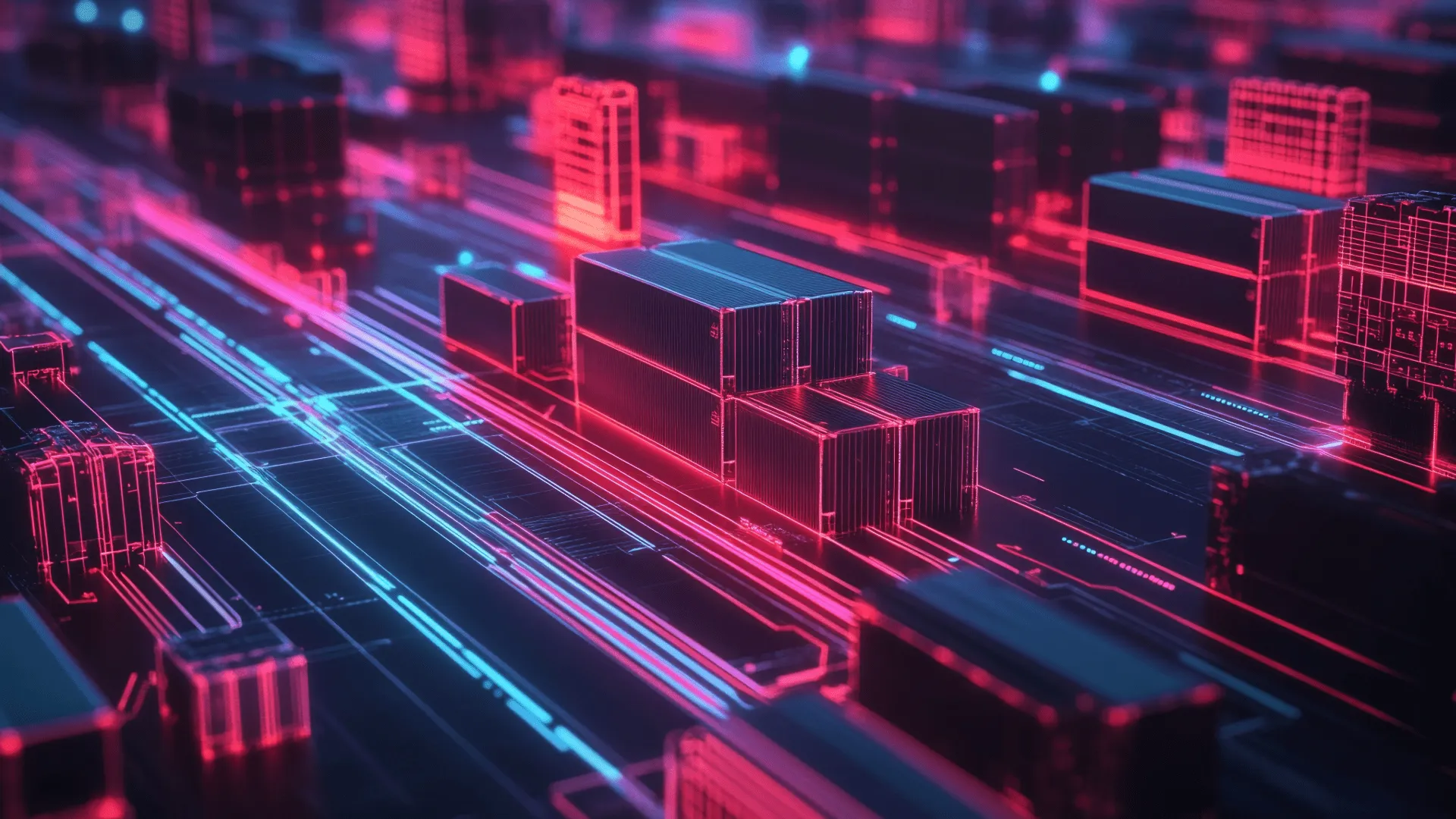
Applying Supply Chain Simulation technologies enables organizations to create a digital representation, or Digital Twin, of a supply chain system, which businesses can then utilize to model, analyze and optimize their end-to-end processes in a risk-free virtual environment. It mirrors real-world scenarios, enabling organizations to experiment with different strategies, assess the impact of changes and make informed decisions before implementation.
Whether your organization is trying to study and optimize your entire supply chain workflow, or if you have a very specific supply chain problem that you are trying to solve, the process to create a Digital Twin is the same:
This process begins with data collection. Relevant information such as transportation costs, lead times, inventory levels, resource availability and other factors is collected and used to build the foundation of the virtual model.
With broad technical expertise, an innovative solution portfolio and a breadth of experience across industrial sectors, IndX's global Simulation & Decision Science team collaborates with stakeholders and third-party logistics (3PLs) along the supply chain to make sure that the right data is collected and utilized to build a comprehensive model that accurately represents their real-life supply chain.
After identifying the critical variables and parameters that will be modeled, our team leverages the most advanced simulation software on the market today to build the 3D model.
Next, the model is developed. Upon implementing the chosen solution, IndX experts begin developing mathematical models and algorithms that represent the relationships and interactions between different elements of our customer’s supply chain, including equations, logic statements and decision rules to simulate real-world dynamics.
These equations are validated by comparing the model’s output with historical data or real-world observations and calibrated to ensure that it accurately reflects the behavior of the actual supply chain.
Once the model is ready, it is time to define scenarios and run simulations. First, our team will specify the scenarios to be simulated, including variations in demand, changes in production schedules, disruptions and random factors.
During execution, we analyze the results to identify performance metrics and assess the impact of different decisions, which enables us to optimize the customer’s supply chain processes, identify bottlenecks and refine decision-making strategies.
By adjusting parameters and running tests frequently, the Supply Chain Simulation model can be continuously improved and utilized by the customer long after the project is over. Documenting results and communicating findings to key stakeholders facilitates informed decision-making along the supply chain.
Building a Supply Chain Simulation model is an iterative process that involves continuous refinement and validation to ensure its effectiveness in providing valuable insights and support for decision-making. By embracing Supply Chain Simulation, organizations gain the ability to see their supply chains holistically and analyze alterations in a risk-free virtual environment, tackling challenges such as demand variability, inventory management intricacies, lead time uncertainties and overall operational inefficiencies with a more informed and strategic approach.
IndX has broad technical expertise, deep regulation knowledge and an innovative solution portfolio that makes us a power player in the arena of supply chain management. Our global team of Simulation & Decision Science experts has helped businesses across industrial sectors worldwide to optimize their supply chains for over a decade.
By understanding and leveraging the potential of data, our Supply Chain Simulation solutions play a pivotal role in unlocking the true efficiency and resilience of the modern supply chain.