










What this Solution Fixes

logo
Managing large volumes of product data across the enterprise
logo
Centralize product data and processes within a PLM system
logo
Difficulty keeping product information current and controlled
logo
Use revision-controlled PLM systems with defined access and traceability
logo
Disconnected design and manufacturing processes
logo
Link design data to manufacturing routing and downstream systems through PLM
logo
logo

What is Product Lifecycle Management (PLM)?

Product Lifecycle Management, or PLM, is the process of managing the complete lifecycle of a product from ideation, through engineering design and manufacturing, to service and disposal. PLM systems are built to integrate product data with business processes and systems. They provide a centralized location for each detail of design and manufacturing including Bill of Materials (BOM), compliance records, manufacturing tools and resources libraries, digital work instructions, etc. Companies can leverage PLM systems to collaborate instantly throughout the product design and process planning of piece-part manufacturing and assembly processes and operations.

Why Use PLM Systems?

Organizing and managing large amounts of data is a huge task in the manufacturing industry. Furthermore, keeping this information up-to-date as well as making sure that data is controlled and accessible between different departments across an enterprise organization is a big challenge. Within a PLM system, teams and individuals can create, organize, manage and consolidate information effectively.

From Design to Manufacturing: Closing the Loop

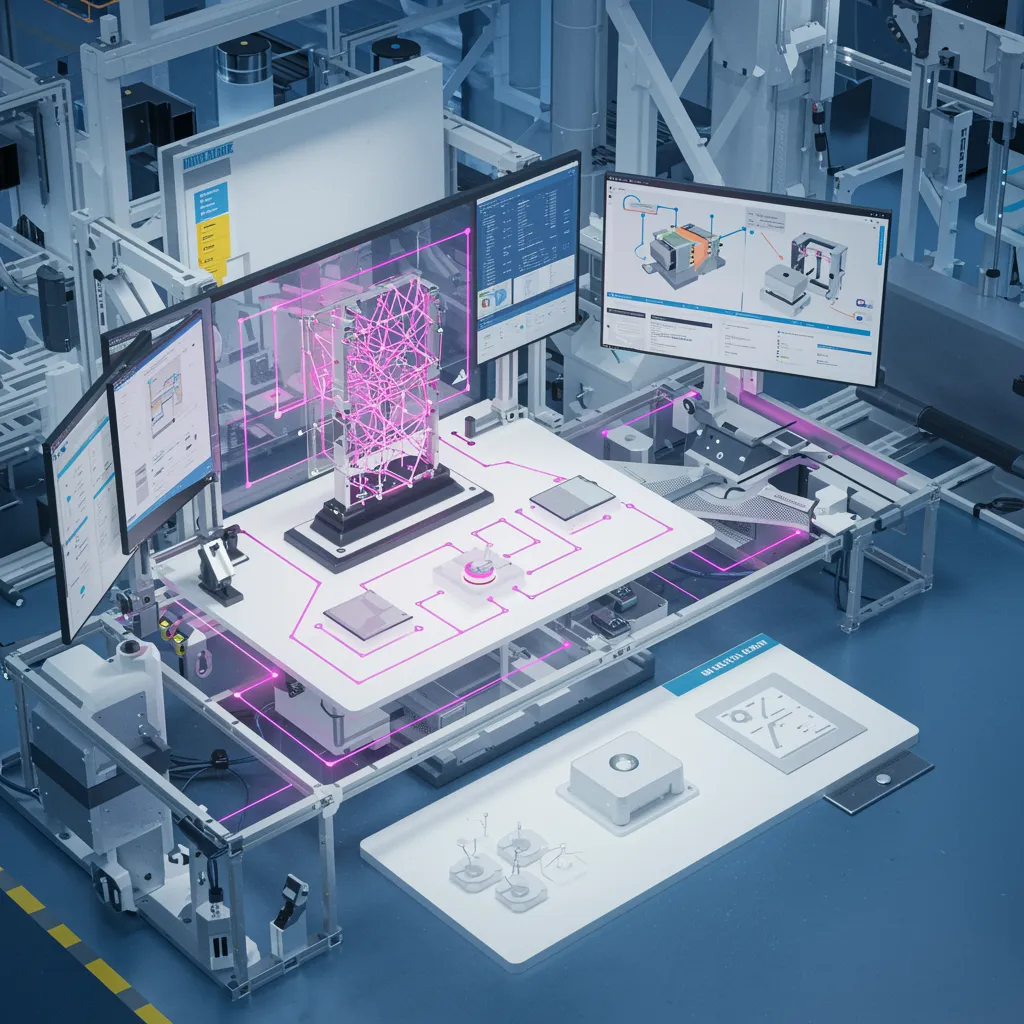
PLM systems promote accurate and informed decision-making throughout the lifecycle of the product. They offer several features designed to significantly increase productivity across multiple disciplines. Starting with product design, PLM systems store 3D data as well as detailed properties of assemblies and components. The product design is revision controlled, allowing continuous updates and improvements, while also restricting user access and tracing the maturity status. Manufacturing can then use the design information to create a detailed manufacturing routing which can be passed to downstream systems such as Enterprise Resource Planning (ERP) and Manufacturing Execution Systems (MES). In addition, PLM systems can be integrated with simulation tools, as a result allowing companies to optimize the manufacturing process from details of robotics and ergonomics to plant simulation.

Features of PLM Systems

  • Design and process document management
  • BOM configuration management permitting variability to support the entire scope of a product’s configuration
  • Embedded viewer enabling the user to visualize and manipulate 3D product designs
  • Defined company organizational structure allowing designated access control
  • Automated digital workflows designed to capture business procedures in which documents, information or tasks are passed from one user to another
  • Extensive reporting capabilities
  • Integrated with simulation tools
  • Integrated with other business processes such as Enterprise Resource Planning (ERP) and Manufacturing Execution Systems (MES)

Benefits of PLM Systems

  • Flexible, automated business processes
  • Version control enabling BOM evolution and continuous process improvement
  • Effective collaboration and communication across disciplines
  • Improved productivity and minimized rework with visibility of up-to-date and accurate BOM information
  • Optimized changed management process with a clear understanding of impacted data, users and processes
  • Greater traceability for product changes and updates
  • Reduced costs due to extensive re-use of documentation
  • Maximized lifetime value of the product

To learn more about our digital tool offering for PLM, click here.

What powers this solution

No items found.

Our Approach

1
Data Centralization
Centralizing product data ensures all stakeholders have access to the latest information.
2
Collaboration Tools
Using collaboration tools enhances communication and project management.
3
Regulatory Compliance Tracking
Implementing compliance tracking features ensures adherence to industry standards.

Andrea Salerno

PLM Practice Services Director
Andrea has nearly 15 years of experience delivering Industry 4.0 programs across PLM, ERP, and MOM/MES. At IndX, she leads the PLM Practice, bringing deep expertise in Siemens PLM platforms and real-world manufacturing workflows shaped by her background as a design and manufacturing engineer.
talk with our experts
No items found.
image
Industry 4.0
image
3
min
IndX Innovation Lab: Your Gateway to Industry X.0
watch now
image
image
Digtial Transformation
image
3
min
Our Siemens Partnership on Digital Transformation
watch now
image
image
Product Lifecycle Management
image
2
min
A Single Source of Truth with PLM
watch now
image
No items found.

Start Your Digital Thread With IndX

Fix execution at the source

When engineering, manufacturing, supply chain, and analytics run on disconnected data, problems compound downstream. IndX helps you establish a controlled digital thread that turns intent into reliable execution. Start with a free assessment call.
Thank you! Your submission has been received!
Oops! Something went wrong while submitting the form.