
Bring Complex Products to Market Faster
Making lifecycle decisions early helps products scale globally with fewer delays, less waste and lower risk
Home and Personal Care manufacturers are operating under increasing pressure. Consumers demand transparency on sourcing, production and environmental impact. Regulators enforce stricter rules on materials, packaging and traceability. At the same time, product portfolios are expanding with more variants, shorter lifecycles and global production footprints.
Scaling innovation from R&D to hundreds of production sites often exposes late-stage constraints. Manufacturing feasibility, packaging compatibility and local plant differences can delay launches, increase waste and erode margins. Addressing these risks requires a holistic view of the entire product lifecycle rather than isolated optimization of design or production alone.
The Key Industry Challenge: Scaling Without Rework
Moving from formulation to global production is complex. Products designed in isolation from manufacturing reality often fail during scale-up.
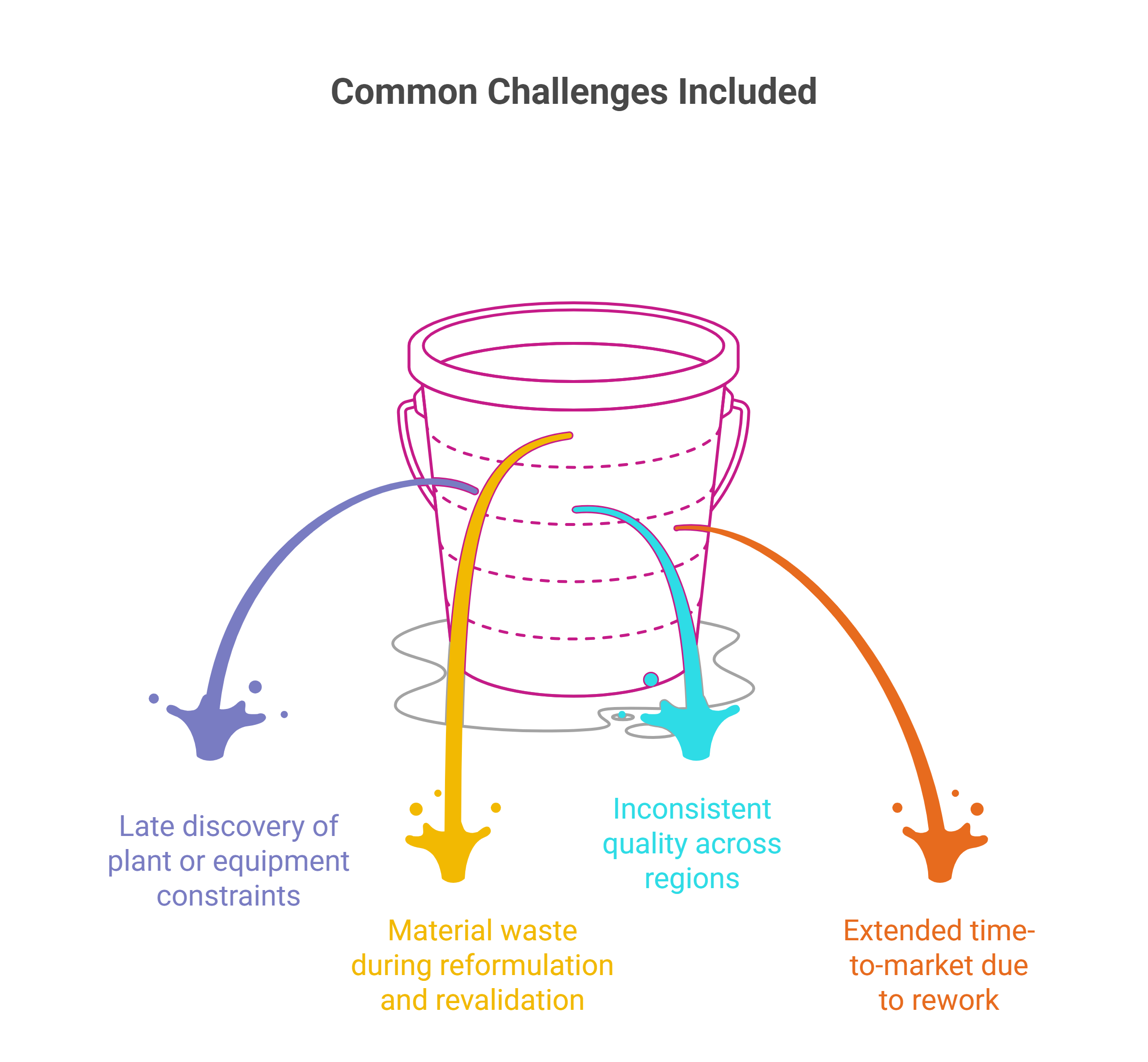
An integrated lifecycle approach connects product design, production planning and logistics early. This reduces late-stage surprises and supports faster, more reliable launches across multiple sites .
Integrated Lifecycle Management: What It Is
Integrated Lifecycle Management, or ILM, connects brand, product, process and production data across the full lifecycle. It enables concurrent work across engineering, manufacturing and supply chain teams using a shared data backbone.
Core capabilities include
-
Integration of product, program and brand data
-
Re-use of validated assets across products and sites
-
Flexible execution that adapts to regional differences
-
Consistent quality independent of manufacturing location
This end-to-end data continuity supports efficiency, sustainability and ROI without fragmenting systems or teams.

Sustainability Starts at Design
Sustainability in Home and Personal Care is no longer limited to the finished product. Environmental impact is defined by design decisions, production methods, packaging choices and supply chain operations.
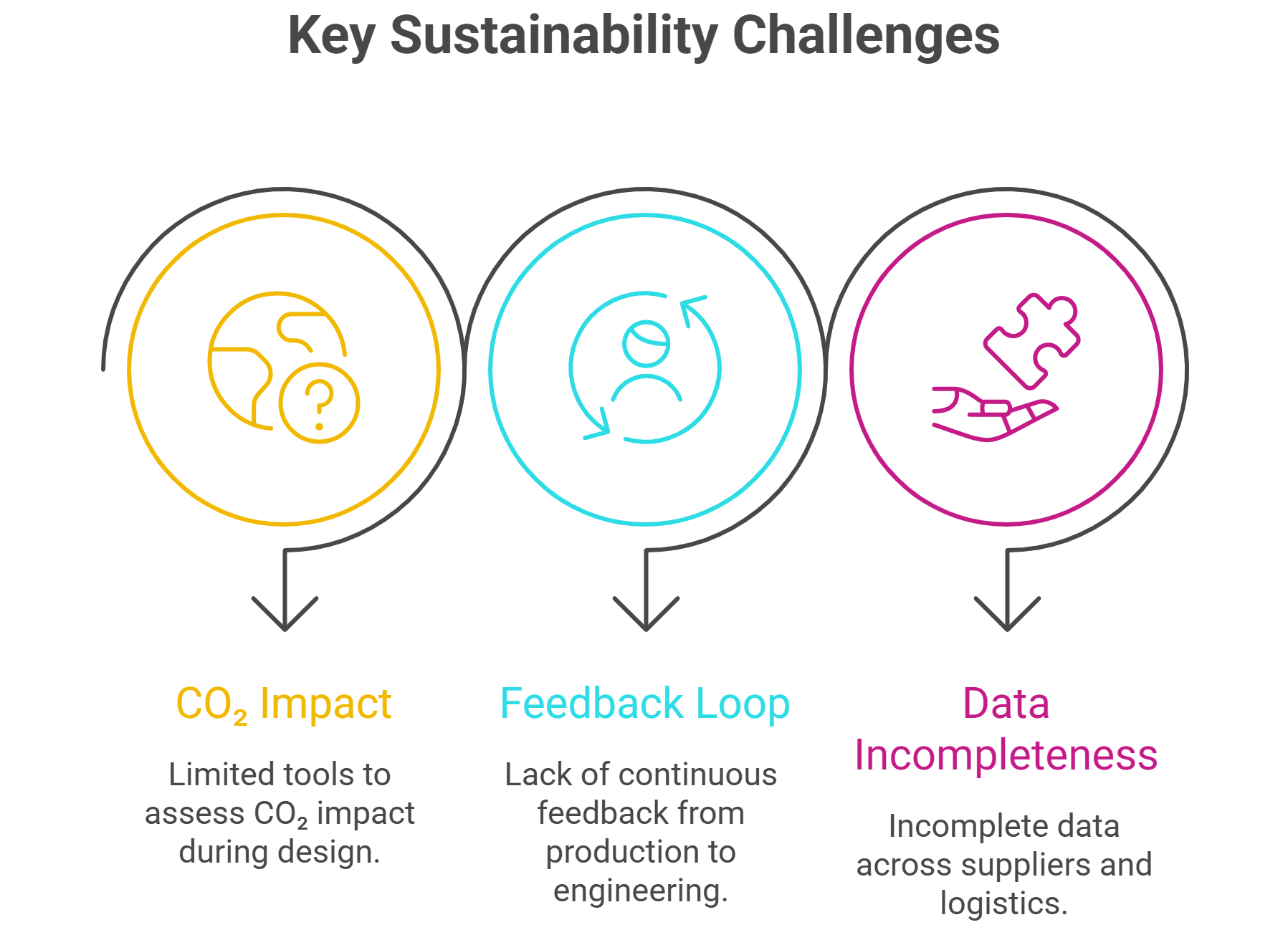
With most environmental impact determined during the design phase, lifecycle-wide digitalization is critical. Integrated data enables manufacturers to evaluate materials, processes and packaging earlier and more reliably .
Traceability Across the Lifecycle
Traceability is fundamental to both sustainability objectives and consumer trust in the Home and Personal Care industry. Manufacturers must maintain clear visibility into where ingredients originate, how products are manufactured and how they move through the supply chain to reach the end customer.
When traceability is embedded across the lifecycle, organizations gain real-time insight into production changes and greater confidence when shifting between plants, equipment or production conditions. It also enables verification of responsible sourcing practices and supports transparent, consistent reporting to regulators and consumers.
By relying on integrated lifecycle data, manufacturers can ensure that quality and compliance are maintained even as products, materials or production environments change.
Steps to Integrating Lifecycle Management
Implementing ILM requires structured alignment across the organization.
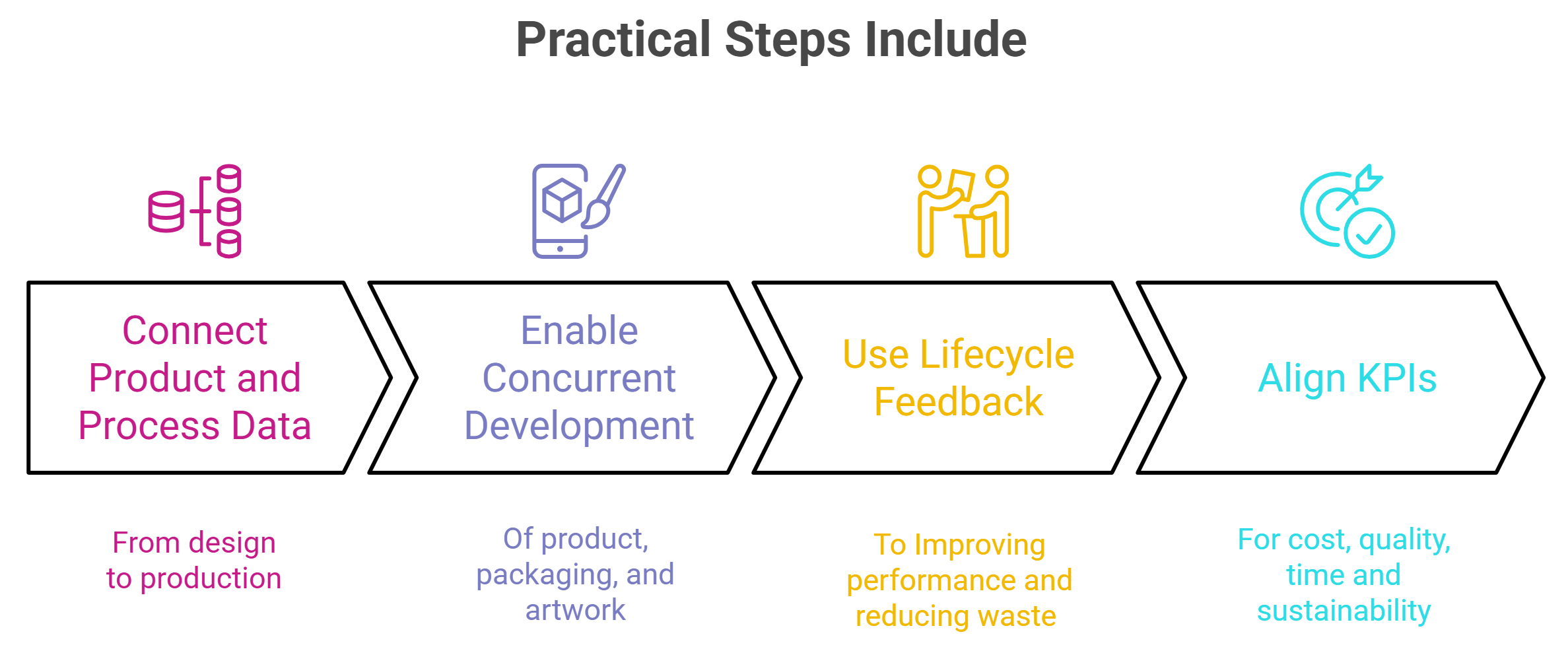
This approach supports faster decision-making and more predictable execution at scale .
Why Choose Integrated Lifecycle Management with IndX and Siemens
IndX works with Siemens to support manufacturers in implementing Integrated Lifecycle Management in a structured and engineering-focused way. The approach is grounded in end-to-end data continuity, lifecycle transparency and execution discipline.
Value for Home and Personal Care manufacturers
- Faster time-to-market across global production sites
- Reduced rework through early validation
- Improved sustainability through lifecycle insight
- Consistent product quality at scale
By connecting product and process across the lifecycle, organizations can manage complexity without compromising compliance, performance or sustainability .
This article is based on the paper was originally published by Siemens.
 NEWS
NEWS
Product Lifecycle Solutions for Railway Manufacturing
Our PLM team is helping a railway component manufacturer implement Siemens Teamcenter for holistic digital transformation.
Read More
 WHITE PAPER
Design Automation & PLM Solutions
Dive into Design Automation and Product Lifecycle Management (PLM) solutions for optimized design processes and efficiency.
Read More
 VIDEO
VIDEO
Coca-Cola HBC's Journey to OT/IT Convergence
Discover how our experts led Coca-Cola HBC’s digital transformation through IT/OT integration, global asset connectivity and smart solutions.
Read More