
The Impact of AI on Manufacturing
From AI pilots to scalable shop floor impact.
Manufacturers are navigating rising cost pressures, supply chain volatility and workforce constraints while being expected to increase efficiency and quality. At the same time, production environments are generating vast volumes of operational data that remain underutilized.
The SAP white paper on the impact of AI on manufacturing highlights a critical shift: AI is moving beyond experimentation and becoming embedded in core manufacturing processes. The focus is no longer on isolated analytics initiatives. It is on measurable operational performance improvements driven by structured deployment.
AI adoption is accelerating across production, quality and maintenance functions. However, scaling remains the primary challenge. Many manufacturers struggle to integrate AI into existing systems, align initiatives with business KPIs and replicate results across multiple plants.
Key Questions Addressed in the White Paper
The original IDC research provides executive-level guidance by answering critical strategic and operational questions, including:

These questions help C-level leaders, plant directors and heads of data align AI initiatives with operational KPIs and financial objectives.
Key Industry Challenges
Manufacturing executives face structural obstacles when moving from pilot projects to enterprise-wide AI adoption:
-
Fragmented production and enterprise data landscapes
-
Limited integration between operational technology and IT systems
-
Manual and reactive decision-making processes
-
Inconsistent governance and deployment models across sites
These issues directly impact throughput, quality stability and cost control.
Measurable Business Impact of AI Adoption
Manufacturers that successfully deploy AI within production environments report improvements in:
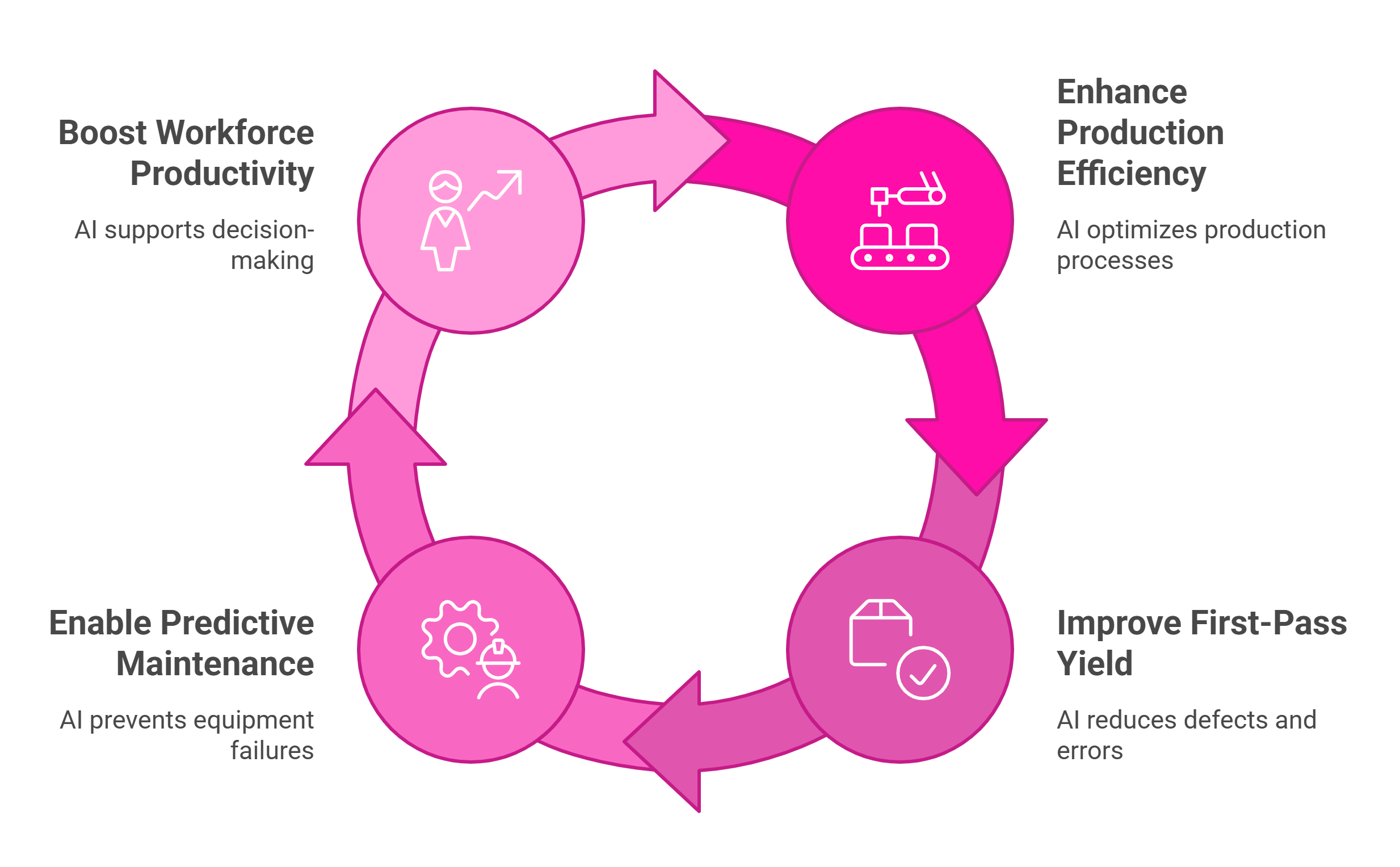
The results demonstrate that AI delivers value when embedded into manufacturing execution and operational workflows rather than deployed as isolated analytics initiatives.
Critical Success Factors for Scaling AI
IDC identifies several characteristics shared by successful AI-driven manufacturers :
-
End-to-end integration of manufacturing and enterprise systems
-
Clear data management and AI governance frameworks
-
Executive sponsorship aligned to business outcomes
-
Standardized rollout models enabling replication across plants
Scaling AI requires engineering discipline, cross-functional alignment and a production-focused mindset.
SAP and IndX Expertise in Digital Manufacturing
As a strategic SAP partner, IndX supports manufacturers in translating AI strategy into structured execution within SAP Digital Manufacturing environments.
IndX enables organizations to:
-
Integrate AI into core manufacturing processes
-
Harmonize production data across plants and systems
-
Establish scalable governance and deployment frameworks
-
Align AI initiatives with operational and financial KPIs
For executive decision makers, the opportunity is clear: move beyond experimentation and embed AI into digital manufacturing architecture to achieve measurable, repeatable operational performance improvements.